Blur: The NFT Marketplace Poised to Challenge OpenSea's Dominance – A Critical Analysis
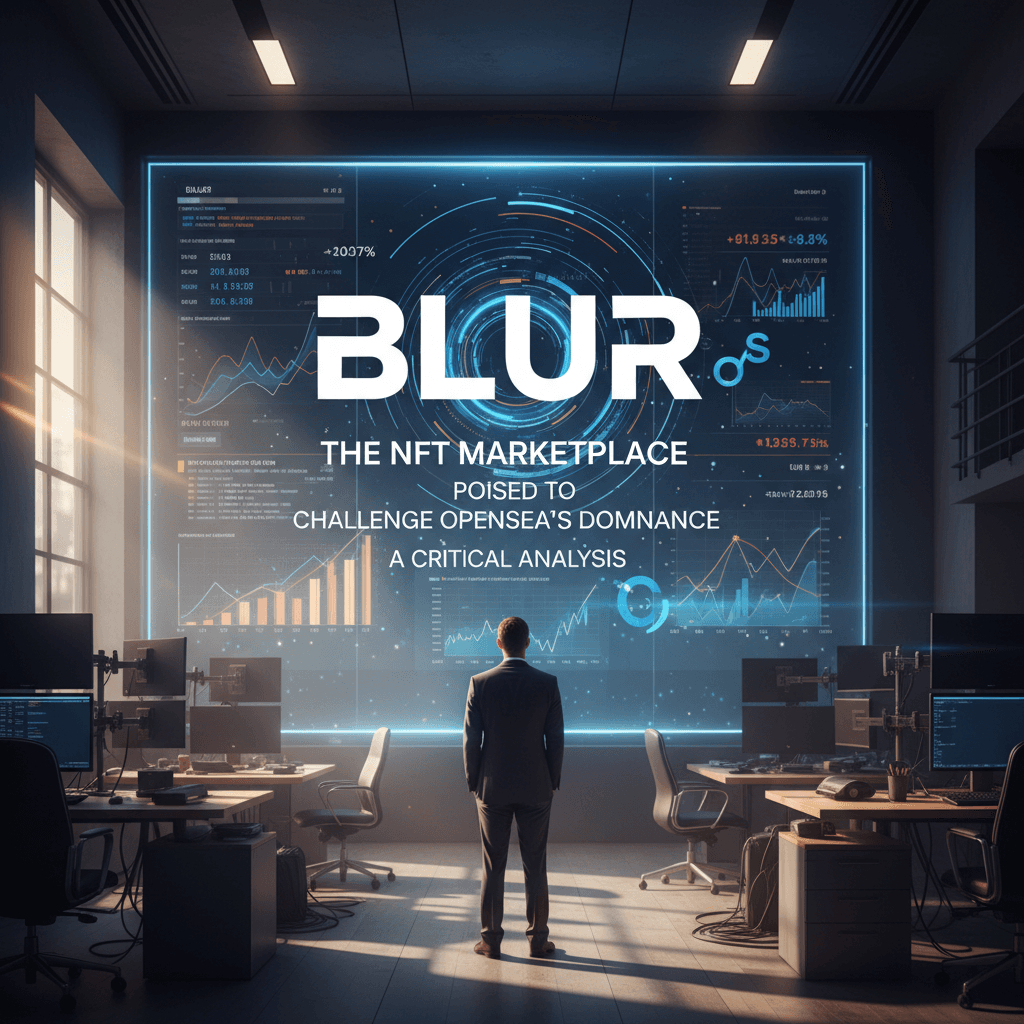
Blur: A Contender in the NFT Arena or a Flash in the Pan?
The Non-Fungible Token (NFT) market, once a niche corner of the cryptocurrency world, has exploded into a multi-billion dollar industry. And with that explosion comes furious competition. For years, OpenSea reigned supreme as the undisputed king of NFT marketplaces. Now, a new challenger has emerged: Blur. Backed by prominent venture capital firms and fueled by a controversial "incentive" based token launch, Blur is aggressively attempting to snatch market share from OpenSea. But can it succeed? And more importantly, what does this mean for investors navigating the volatile landscape of Web3?
The answer, as is often the case in crypto, is complex. Blur's strategy is undeniably disruptive, but whether it's sustainable or ultimately beneficial for the NFT ecosystem remains to be seen. My perspective, forged from years of analyzing crypto markets, leans towards cautious optimism tempered by a healthy dose of skepticism. This isn't a simple story of David versus Goliath; it's a battle of different philosophies, incentive structures, and ultimately, visions for the future of NFT trading.
The Rise of Blur: Incentive Engineering and Aggressive Acquisition
Blur launched with a clear mission: to unseat OpenSea. Their strategy hinges on two key pillars: a superior trading experience geared towards professional traders and an innovative tokenomics model designed to incentivize usage and reward loyalty. Crucially, the Blur team has deeply prioritized trading speed and sophisticated analytics - features OpenSea sorely lacked, and which appealed to a critical mass of sophisticated traders. In the fast-paced world of NFT flipping, milliseconds can translate to thousands of dollars in profit or loss. This speed advantage gave Blur an immediate edge.
However, the most distinctive aspect of Blur is its "incentivized" distribution of the BLUR token. Early users were rewarded with tokens based on their trading volume and activity on the platform. This tactic, while effective in attracting users and boosting transaction volume, has drawn criticism for potentially incentivizing wash trading (artificially inflating trading volume to earn rewards). The "free" money effect resulted in massive market share capture in a relatively short time frame. Traders who had previously solely used OpenSea were incentivized to test - and then stay - on Blur.
This aggressive acquisition strategy is a high-risk, high-reward gamble. If Blur can successfully retain its user base after the initial token distribution phase, it could solidify its position as a major player in the NFT market. If, however, users leave once the incentives dry up, Blur could face a steep decline. The key determinant of longer-term success hinges on the extent to which the technological advantages, and vibrant community truly create intrinsic value.
Protocol Plumbing: Understanding Blur's Technical Edge
Beyond the headline-grabbing token incentives, understanding the technical architecture and features driving Blur's appeal is vital. The platform’s infrastructure is built for speed and efficiency. It offers real-time data feeds, advanced charting tools, and customizable interfaces -- all designed to optimize the trading experience. It aggregates data from various marketplaces, provides portfolio management dashboards, and offers features like limit orders and batch bidding, features previously unheard of in the space. These are not superficial add-ons; they represent a fundamental shift towards a more sophisticated trading environment.
Furthermore, Blur's focus on gas optimization is crucial. Rising gas fees on Ethereum have long been a barrier to entry for many NFT traders. Blur actively works to minimize gas costs, making trading more accessible and profitable. By optimizing smart contracts and transaction processing, Blur reduces the friction associated with buying and selling NFTs. While small in isolation, combined with all of the other value-added elements, adds significantly to the longer-term appeal.
However, this technological advantage also introduces potential vulnerabilities. A more complex system increases the attack surface for hackers. Robust security audits and ongoing monitoring are essential to ensure the platform's integrity and protect user funds. Blur must continuously invest in its security infrastructure to maintain user trust. The team is actively addressing these, which should offer more comfort to institutional investors.
Institutional Sentiment: A Shake-Up in Market Dynamics
The emergence of Blur has undoubtedly shaken up institutional sentiment towards the NFT market. OpenSea's perceived complacency and lack of innovation created an opening for a more agile and user-focused competitor. While OpenSea remains the dominant player in terms of overall trading volume, Blur has captured a significant share of the high-volume, professional trading segment. This shift in power dynamics is forcing OpenSea to adapt and innovate, or risk losing further ground.
For institutional investors, Blur represents a more dynamic and sophisticated trading environment. The availability of advanced trading tools and real-time data feeds allows for more informed decision-making. However, the platform's aggressive tokenomics and potential for wash trading also raise concerns about market manipulation and regulatory scrutiny. Institutional investors must carefully weigh the potential rewards against the inherent risks before allocating capital to the platform.
As the battle between Blur and OpenSea intensifies, institutional investors are closely monitoring the developments. The outcome will likely shape the future of the NFT market and determine which platforms will ultimately thrive. Expect further consolidation, technological adoption, and regulatory clarifications.
The Trade-Offs: Decentralization vs. Optimization
One of the fundamental trade-offs in the NFT market is the balance between decentralization and optimization. OpenSea, while not entirely decentralized, has traditionally operated with a more open and permissionless approach. Blur, on the other hand, prioritizes speed and efficiency, even if it means sacrificing some degree of decentralization.
This raises important questions about the long-term sustainability of each approach. While decentralization is a core tenet of the Web3 movement, it can also lead to slower transaction speeds and higher fees. Optimization, while improving the user experience, can potentially lead to centralization and increased regulatory risk. The crypto space is actively thinking through these strategic trade-offs.
The success of Blur will depend on its ability to strike the right balance between these competing forces. It must continue to innovate and improve the trading experience without compromising the fundamental principles of decentralization. The team must work hard to build strong relationships with the community, as well as proactively address any regulation and compliance concerns.
Counter-Arguments: The Sustainability of Incentives and the OpenSea Counterattack
Critics of Blur argue that its success is primarily driven by unsustainable token incentives. Once the initial token distribution ends, they contend, users will migrate back to OpenSea or other platforms. Moreover, they argue that the aggressive focus on professional traders alienates the broader NFT community and creates an uneven playing field. This is a fair concern, so the team must continue to look for ways to improve the platform with intrinsic features unrelated to token incentives.
Furthermore, OpenSea is not standing idly by. The marketplace has been actively rolling out new features and initiatives to compete with Blur, including lower fees, improved trading tools, and support for new NFT standards. OpenSea's established brand recognition and massive user base give it a significant advantage in the long run. The incumbents, even though often appear slow, has a massive advantage in overall size and user awareness.
To overcome these challenges, Blur must continue to innovate and differentiate itself from OpenSea. It needs to build a strong community and foster a sense of loyalty beyond the initial token incentives. The team should also work to expand its appeal to a broader audience, including casual collectors and creators.
Data-Driven Evidence: Metrics and Market Share
While anecdotal evidence suggests that Blur is gaining traction, it's important to analyze the data to assess its true impact on the market. Trading volume on Blur has surged since its launch, surpassing OpenSea on certain days. However, it's important to consider the potential for wash trading inflating these figures. The true test will be whether Blur can maintain its market share even after the initial token incentives dry up.
Another key metric to watch is the number of active users on each platform. While Blur has attracted a significant number of new users, OpenSea still boasts a much larger user base. The ability to retain and grow its user base will be crucial for Blur's long-term success. Ultimately, the numbers will speak for themselves, and investors should look past short-term headlines in favor of long-term trends.
Analytically dissecting trading data to extract an insightful perspective that is not visible to other traders seems to be an opportunity on Blur.
Political and Technical Bottlenecks: Regulation and Scalability
The NFT market faces numerous political and technical bottlenecks that could impact the future of Blur and other platforms. Regulatory uncertainty remains a major concern, particularly regarding the classification of NFTs as securities. If regulators crack down on the NFT market, it could significantly impact trading volume and investor sentiment.
Scalability is another challenge. As the NFT market grows, platforms must be able to handle increasing transaction volumes and prevent network congestion. Ethereum's high gas fees continue to be a barrier to entry for many users, and scaling solutions are needed to make NFTs more accessible and affordable. Technical stability, in a sector with constant upgrades and experimentation, should not be discounted.
Blur must actively monitor the regulatory landscape and work to comply with any new rules and regulations. It must also invest in its infrastructure to ensure scalability and prevent network congestion. Navigating these challenges will be critical for its long-term survival.
Realistic 6-Month Outlook: A period of Intense Competition
In the next six months, I expect the battle between Blur and OpenSea to intensify. OpenSea will likely roll out new features and initiatives to regain lost market share, while Blur will focus on retaining its user base and expanding its appeal to a broader audience. Expect some more hype and marketing, as well as outright token incentives and rewards
The future of the NFT market remains uncertain. Regulatory developments, technological innovations, and shifting investor sentiment could all significantly impact the trajectory of Blur and other platforms. The bottom line: investors should approach Blur and the broader NFT market with both excitement and caution. Understand the risks, do your due diligence, and diversify your portfolio. It's a wild west out there, but with careful navigation, there's potential for substantial rewards. The future will hinge on a variety of elements, with community support and active trading volume being two metrics worth noting.
FAQ: Blur and the NFT Market
Q1: Is Blur a long-term threat to OpenSea?
Blur has the potential to be a long-term threat to OpenSea, but its success depends on its ability to retain users beyond the initial token incentives and continue innovating to differentiate itself. OpenSea also has a large base of users and brand recognition, so Blur still has a long road to climb.
Q2: What are the main risks of investing in NFTs on Blur?
The main risks include the potential for wash trading, regulatory uncertainty, and the volatility of the NFT market. The long-term value of many NFTs remains uncertain, and investors should be prepared to lose a significant portion of their investment.
Q3: How does Blur address the issue of gas fees on Ethereum?
Blur implements various gas optimization techniques to minimize transaction costs, making trading more accessible and profitable for its users. Blur's focus on efficiency and scalability is a competitive advantage in the gas-intensive Ethereum ecosystem.
Q4: Will regulatory changes impact NFT marketplaces like Blur?
Regulatory changes could significantly impact NFT marketplaces. Stricter regulations regarding the classification of NFTs as securities or the prevention of money laundering could dampen trading volume and investor sentiment. Hence, its critical to stay aware of all relevant regulatory concerns.
Q5: What are the key differences between Blur and OpenSea for experienced NFT traders?
Blur prioritizes real-time market prices, advanced trading tools, and lower fees, allowing more experienced traders to act with speed and agility. OpenSea will probably appeal more to newcomers, and casual users.