MetaMask Deep Dive: A Comprehensive Guide for Institutional and Retail Investors
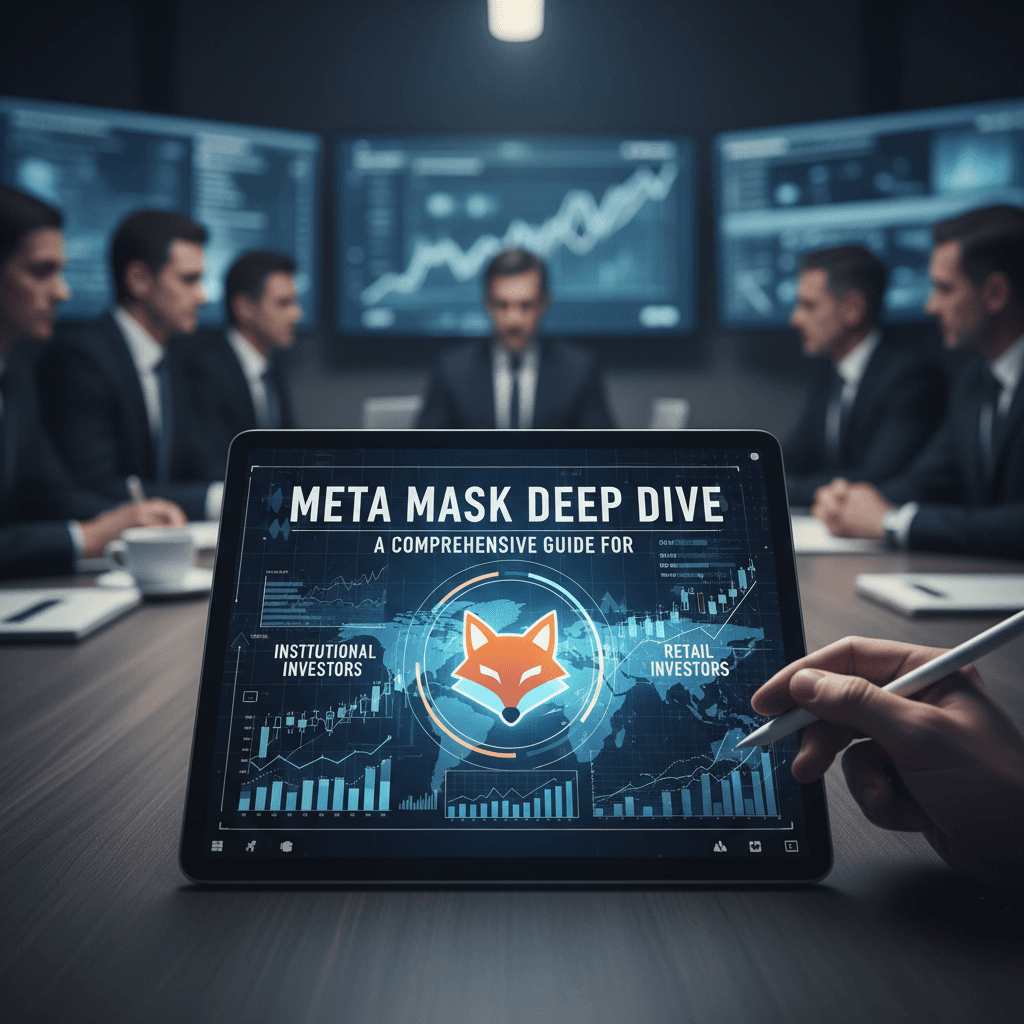
MetaMask Deep Dive: A Comprehensive Guide for Institutional and Retail Investors
MetaMask, the ubiquitous browser extension and mobile application, serves as a crucial gateway to the decentralized web, or Web3. For institutional and retail investors alike, understanding its function, installation, and, most importantly, its security implications is paramount. This comprehensive guide delves into the step-by-step process of acquiring and configuring MetaMask, highlighting best practices to mitigate inherent risks while accessing decentralized finance (DeFi) protocols, non-fungible tokens (NFTs), and a growing ecosystem of blockchain-based applications. The seemingly simple process of downloading and installing MetaMask belies the complexities and potential pitfalls that demand careful consideration, especially when significant capital is at stake.
I. Downloading and Installation: Navigating the Options
The first step towards leveraging MetaMask involves downloading and installing the application. Users have several options, each with its own set of advantages and considerations. Predominantly, MetaMask is available as a browser extension for Chrome, Firefox, Brave, and Edge. It also exists as a mobile application for both iOS and Android devices. For institutional investors, the choice between browser extension and mobile app hinges on workflow integration and security protocols. Browser extensions offer convenient access within a desktop environment, facilitating integration with trading platforms and research tools. However, they are also more susceptible to malware and phishing attacks compared to dedicated mobile devices.
The official MetaMask website (metamask.io) is the only reliable source for downloading the application. Directly downloading from the official website mitigates the risk of installing a malicious clone designed to steal private keys. Once on the website, users can select their preferred platform and follow the prompts for installation. During the installation process, the browser extension will request permissions to access and modify website data. While these permissions are necessary for MetaMask to interact with Web3 applications, it's crucial to understand the implications. Granting excessive permissions can potentially expose sensitive information to malicious websites, emphasizing the need for diligent vetting of the sites you interact with through MetaMask. Upon installing either the extension or app, you'll be greeted with the option to import an existing wallet using a seed phrase or creating a new one. For institutional setups, consider hardware wallet integration from the outset for enhanced security.
II. Creating a New Wallet: Seed Phrase Management and Security
Creating a new MetaMask wallet generates a 12-word seed phrase, also known as a recovery phrase. This seed phrase is the master key to accessing your funds and should be treated with utmost care. Losing the seed phrase means losing access to the wallet and all associated assets. Unlike traditional financial institutions, there is no central authority to recover a lost seed phrase. This underscores the imperative of securely storing the seed phrase offline.
MetaMask prompts users to write down their seed phrase on a piece of paper and store it in a secure location. This is the most basic form of offline storage. However, for institutional clients, more robust solutions are necessary. These include: multi-signature wallets requiring multiple approvals for transactions, cold storage solutions involving hardware wallets kept offline, and securely encrypting and distributing the seed phrase across geographically diverse locations. Consider solutions like Shamir Secret Sharing to split the seed phrase into multiple parts, requiring a subset of those parts to reconstruct the original. It's critical to understand that anyone who gains access to the seed phrase can control the wallet and its contents. Therefore, avoid storing the seed phrase digitally on computers, phones, or cloud storage services. Phishing attacks often target MetaMask users, attempting to trick them into revealing their seed phrase. Always be skeptical of emails, messages, or websites that ask for your seed phrase. MetaMask will never ask you for your seed phrase unless you are actively restoring your wallet on a new device.
III. Configuring MetaMask: Network Settings and Gas Fees
By default, MetaMask is configured to connect to the Ethereum mainnet. However, the Ethereum ecosystem encompasses a variety of testnets and layer-2 scaling solutions. Institutional investors often utilize testnets to experiment with DeFi protocols or test smart contract deployments without risking real funds. Connecting to a testnet requires manually adding the network details to MetaMask.
This involves specifying the network name, RPC URL, chain ID, currency symbol, and block explorer URL. Official network configuration details can usually be found on the project's documentation. Improperly configuring network settings can lead to confusion and potentially irreversible errors. For instance, sending tokens to a contract address on the wrong network can result in permanent loss of funds. Besides network settings, understanding gas fees is crucial for Ethereum-based transactions. Gas fees are the transaction fees paid to miners for validating and executing transactions on the blockchain. These fees fluctuate based on network congestion and transaction complexity.
MetaMask provides default gas fee recommendations, but these are not always optimal. Setting excessively low gas fees can result in transactions getting stuck or taking a long time to confirm. Conversely, setting excessively high gas fees can lead to unnecessary costs. Tools like Etherscan provide real-time gas price estimates, enabling users to make informed decisions about transaction fees. For automated trading strategies or high-frequency transactions, consider utilizing advanced gas fee estimation strategies or integrating with GasNow or similar services for real-time pricing data.
IV. Integrating with DeFi Protocols: Smart Contract Risks and Audits
MetaMask enables seamless interaction with DeFi protocols, allowing users to lend, borrow, trade, and stake cryptocurrency assets. However, interacting with DeFi protocols inherently involves smart contract risk. Smart contracts are self-executing agreements coded on the blockchain. While they offer transparency and automation, they are also susceptible to bugs, vulnerabilities, and exploits. A single vulnerability in a smart contract can lead to significant financial losses.
Before interacting with a DeFi protocol, it's essential to conduct thorough due diligence. This includes: reviewing the smart contract code, examining audit reports from reputable security firms, understanding the governance structure of the protocol, and assessing the historical performance and reputation of the team behind the project. Avoid blindly trusting unaudited or newly launched protocols. Diversifying your DeFi portfolio across multiple protocols can help mitigate the risk of a single protocol failure.
Furthermore, be aware of impermanent loss, a common phenomenon in decentralized exchanges (DEXs). Impermanent loss occurs when the price of the assets in a liquidity pool diverges, resulting in a loss of value compared to simply holding the assets. Understanding the mechanics of impermanent loss and its potential impact is crucial for providing liquidity on DEXs. For institutional players, formal risk management frameworks must be in place to govern DeFi participation, outlining acceptable risk parameters and due diligence requirements.
V. Security Best Practices: Hardware Wallets, Phishing Protection, and Routine Audits
Securing your MetaMask wallet requires a multi-layered approach encompassing hardware wallets, phishing protection, and routine security audits. Hardware wallets provide an additional layer of security by storing your private keys offline. Popular hardware wallets like Ledger and Trezor seamlessly integrate with MetaMask. When using a hardware wallet, transaction signing occurs on the device itself, preventing private keys from being exposed to your computer or phone. This significantly reduces the risk of malware stealing your funds.
Phishing attacks remain a persistent threat to MetaMask users. Always verify the URL of the websites you visit and be wary of suspicious emails or messages. Install browser extensions like MetaMask's built-in phishing detection to block known phishing sites. Regularly update your MetaMask extension and browser to patch security vulnerabilities. Enable two-factor authentication (2FA) on your email account and other sensitive accounts. Conduct routine security audits of your MetaMask setup, including: reviewing browser extensions, checking for unauthorized access, and verifying transaction history.
For institutional investors, consider implementing a bug bounty program to incentivize security researchers to identify and report vulnerabilities in your MetaMask configuration. Educate your team members about phishing techniques and best practices for securing their accounts. Employ multi-signature wallets requiring multiple approvals for transactions to mitigate the risk of insider threats. Regularly review and update your security protocols to adapt to the evolving threat landscape. Consider establishing a separate "hot wallet" with a limited balance for daily transactions and a "cold wallet" for long-term storage with more robust security measures.
VI. Institutional Sentiment and Protocol Plumbing: Custody Solutions and Regulatory Considerations
Institutional adoption of MetaMask and related Web3 technologies is inextricably linked to the availability of secure custody solutions and the evolving regulatory landscape. Many institutions are hesitant to directly custody digital assets due to concerns about security, compliance, and operational complexity. Third-party custody providers like Coinbase Custody, Gemini Custody, and Fireblocks offer institutional-grade custody solutions that address these concerns. These providers offer features like cold storage, multi-signature wallets, and insurance coverage, providing a higher level of security than self-custodying assets.
However, relying on a third-party custodian introduces its own set of risks, including counterparty risk. Thoroughly vets and due diligence is crucial before entrusting your assets to a custodian. The regulatory landscape surrounding digital assets is constantly evolving. Regulators are grappling with how to classify digital assets, how to regulate exchanges and custody providers, and how to address issues like anti-money laundering (AML) and know-your-customer (KYC) compliance. Institutions navigating the Web3 space must stay abreast of these regulatory developments and ensure compliance with applicable laws and regulations. This may involve implementing robust AML/KYC procedures, obtaining necessary licenses, and engaging with regulators to shape the future of digital asset regulation. The MetaMask Institutional (MMI) offering is a key step, adding enhanced security and compliance features that are requisite for institutional adoption.
VII. Realistic 6-Month Outlook: Evolution and Adaptation
Over the next six months, we anticipate continued evolution in the MetaMask ecosystem. Key developments include further integration with layer-2 scaling solutions, improvements to the user experience, and enhanced security features. The ongoing Ethereum upgrade, known as "the Merge," promises to reduce transaction fees and improve network scalability, making DeFi more accessible to a wider audience. We also expect to see increased regulatory scrutiny of the DeFi space, potentially leading to new rules and regulations that impact institutional participation. Investors should closely monitor these developments and adapt their investment strategies accordingly. Enhanced cross-chain operability will be a key theme, with MetaMask likely expanding its support for other blockchain networks. The ongoing development of account abstraction will further enhance the user experience, paving the way for more sophisticated and user-friendly applications.
Furthermore, expect to see custodians further refine their service offerings to accommodate the nuances of DeFi, NFTs, and decentralized governance tokens. This will likely involve the development of specialized custody solutions for specific types of digital assets and improved tools for managing risks in the DeFi space. Ultimately, the success of MetaMask and the broader Web3 ecosystem will depend on addressing security concerns, navigating the regulatory landscape, and providing a seamless user experience for both retail and institutional investors.
FAQ: MetaMask and Institutional Investment
Q1: What are the biggest security risks associated with using MetaMask for institutional investments, and how can they be mitigated? A: The primary risks include phishing attacks targeting seed phrases, malware compromising browser extensions, and vulnerabilities in smart contracts interacted with through MetaMask. Mitigation strategies involve utilizing hardware wallets for secure key storage, implementing multi-signature wallets for transaction authorization, conducting thorough smart contract audits, and providing comprehensive security training for personnel.
Q2: How can institutional investors ensure compliance with AML/KYC regulations when transacting with MetaMask and DeFi protocols? A: Compliance can be achieved by integrating with KYC/AML service providers that screen wallet addresses for illicit activity, implementing transaction monitoring systems, and adhering to jurisdictional regulations regarding digital asset transfers. Furthermore, using whitelisting protocols can restrict transactions to pre-approved addresses.
Q3: How does MetaMask Institutional (MMI) differ from the standard MetaMask, and what are the key advantages for institutional users? A: MMI offers enhanced security features such as transaction risk scoring, address whitelisting, and integration with institutional custody providers. It also provides compliance tools to meet regulatory requirements. The key advantages are improved security, enhanced compliance, and streamlined workflows for managing institutional-grade digital asset portfolios.
Q4: What are the considerations for delegating access to a MetaMask wallet to multiple team members within an institution? A: Employ multi-signature wallets requiring approvals from multiple team members for transaction authorization. Implement granular access controls to restrict permissions based on roles and responsibilities. Maintain a detailed audit trail of all transactions and access logs. Regularly review and update access permissions to reflect changes in personnel or responsibilities.
Q5: How will the evolution of layer-2 scaling solutions and account abstraction impact MetaMask's role in institutional DeFi strategies? A: Layer-2 scaling solutions will reduce transaction fees and improve network scalability, making DeFi more accessible and cost-effective for institutional strategies. Account abstraction will enhance the user experience, enabling more sophisticated and user-friendly applications, potentially leading to increased institutional participation in DeFi.
Related Analysis
View all news
Demystifying MetaMask: A Deep Dive into Crypto's Gateway and its Implications for Institutional Investors
Tron's Uncertain Path: Regulatory Challenges, Decentralization Debates, and the Quest for Real-World Adoption