Trump's Crypto Crossroads: Policy Shifts and Market Volatility

Trump's Crypto Crossroads: Policy Shifts and Market Volatility
The cryptocurrency market, a volatile and rapidly evolving landscape, finds itself once again at a potential inflection point as the possibility of a second Trump administration looms. While the former president's stance on digital assets has been somewhat inconsistent, his policies, both stated and implied, could have significant and wide-ranging consequences for the sector. Institutional investors, already navigating a complex web of regulatory uncertainty and technological disruption, must carefully assess the potential impact before allocating further capital. This analysis will delve into the specific policy areas, institutional sentiment shifts, and potential market reactions, offering a nuanced perspective on the challenges and opportunities that lie ahead.
Section 1: The Brief (Deep Context)
Donald Trump's initial interactions with cryptocurrency were largely dismissive, famously declaring his preference for the U.S. dollar. However, as digital assets have gained mainstream adoption and political relevance, his rhetoric has evolved. He has, at times, expressed a desire to ensure America remains at the forefront of this technological innovation, hinting at a more accommodating regulatory approach. This contrasts sharply with the often-cautious approach of current regulators, and the shift highlights the inherent political dimension now embedded within the crypto-asset class itself.
Historically, administrations have influenced the crypto market indirectly through broader economic policies affecting interest rates, inflation, and the overall investment climate. Tax policies impacting capital gains and losses, for example, have a direct bearing on crypto trading strategies. Similarly, international trade policies can influence the relative attractiveness of digital currencies as alternative assets. Furthermore, the overall tone set by the executive branch can shape the regulatory landscape by either emboldening or restraining agencies like the Securities and Exchange Commission (SEC) and the Commodity Futures Trading Commission (CFTC). The core issue for institutional investors is the predictability of policy, allowing for robust risk mitigation and strategic asset allocation. Erratic signalling, even when seemingly ‘pro-crypto,’ could be just as detrimental as overt hostility from a risk-management standpoint.
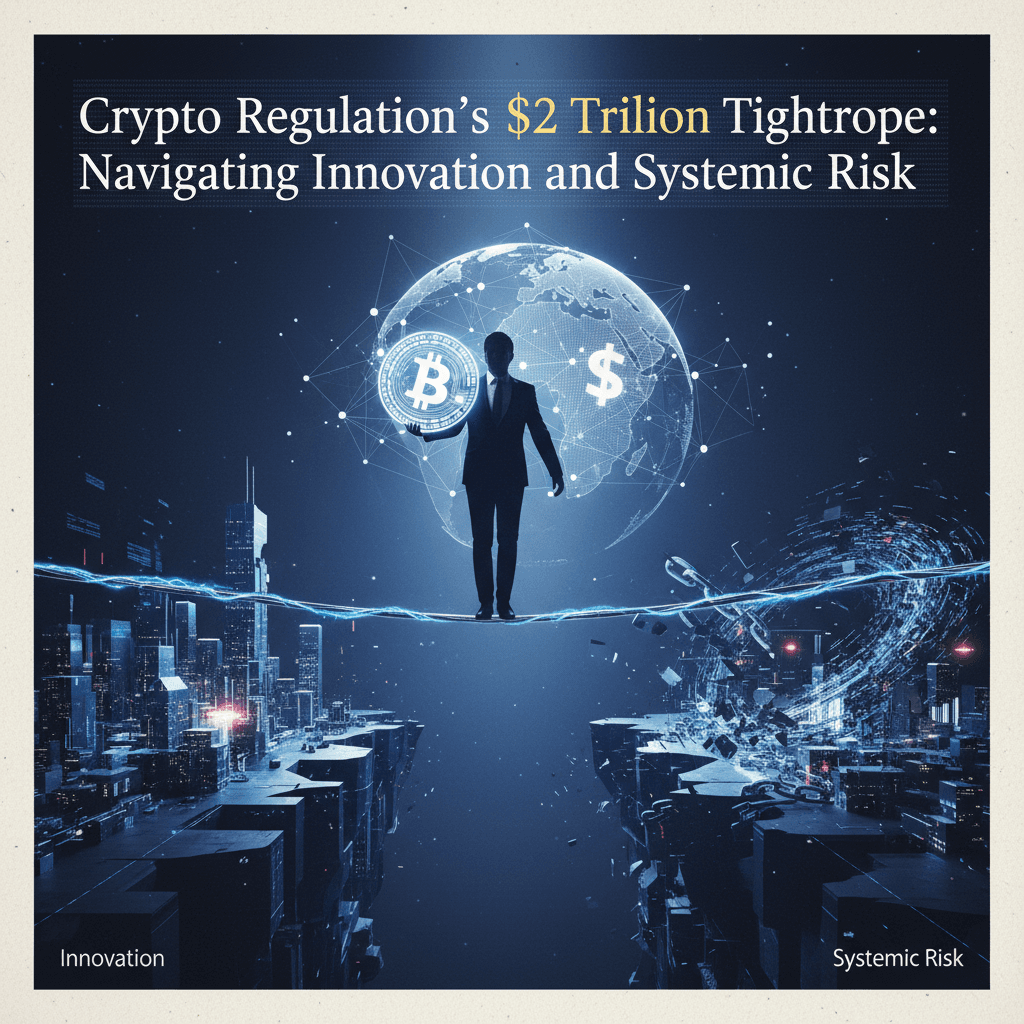
The fundamental challenge lies in the inherent tension between innovation and regulation. A laissez-faire approach could foster rapid development but also increase the risk of fraud and market manipulation. Conversely, overly stringent regulations could stifle innovation and drive crypto activity offshore. Finding the right balance that protects investors and promotes responsible growth is crucial, and the upcoming administration's choices will significantly shape the future trajectory of the industry.
Section 2: Institutional Convergence (The Strategic Shift)
The strategic shift within institutional investment regarding crypto is notable. Initially treated with skepticism and viewed as a speculative asset class, cryptocurrency has slowly gained acceptance. This is evidenced by the launch of Bitcoin ETFs, which have attracted significant capital inflows, and the growing interest from traditional financial institutions in blockchain technology for various applications. Even sovereign wealth funds are reportedly exploring the potential for crypto allocations, albeit with extreme caution and stringent due diligence.
Several factors are driving this convergence. First, the improving regulatory clarity, while still incomplete, is providing a more secure environment for institutional participation. Second, the increasing maturity of the market infrastructure, including custody solutions and trading platforms, is making it easier for institutions to manage and trade digital assets. Third, the potential for high returns, albeit with significant risk, is proving too attractive to ignore, especially in a low-interest-rate environment.
However, the institutional sentiment remains highly sensitive to regulatory developments. Any perceived shift towards a more restrictive regulatory environment under a Trump administration could trigger a significant pullback in institutional investment. Conversely, a clear and supportive regulatory framework could unleash a wave of new capital inflows. The key indicator to watch will be the appointments made to key regulatory positions, such as the heads of the SEC and CFTC, and the signals these appointees send regarding their approach to crypto regulation. Furthermore, look to see if proposed crypto-specific legislation moves forward in congress, or if the executive branch attempts to influence outcomes via executive order. This is where "following the money" in terms of lobbying spend becomes crucial for projecting probable paths.
Section 3: Targeted Impacts (Granular Sector Analysis)
The specific impacts of Trump's policies on the crypto market will vary across different sectors and asset classes. Bitcoin, as the most established cryptocurrency, is likely to be the most resilient to regulatory changes. Its perceived status as a store of value and its increasing adoption by institutional investors provide a degree of stability. However, even Bitcoin could be affected by policies that restrict its use or increase the cost of trading.
Altcoins, with their varying levels of development and market capitalization, are likely to be more vulnerable. Projects that rely heavily on regulatory waivers or unclear legal frameworks could face significant challenges. Conversely, projects that are well-established and compliant with existing regulations could benefit from increased regulatory clarity. DeFi (Decentralized Finance) projects, in particular, face significant regulatory uncertainty due to their complex and often decentralized nature. A crackdown on DeFi could have a significant impact on the entire sector.
The stablecoin market is another area of potential focus. The collapse of TerraUSD (UST) highlighted the risks associated with algorithmic stablecoins and prompted calls for greater regulation. A Trump administration could prioritize the regulation of stablecoins to protect consumers and maintain financial stability. Furthermore, Central Bank Digital Currencies (CBDCs) are a wildcard. While Trump has voiced skepticism about them, framing them as a potential tool for government control, his administration's stance could evolve depending on geopolitical considerations and the pace of CBDC development in other countries. A U.S. CBDC, if implemented, could significantly alter the competitive landscape for existing cryptocurrencies.
Section 4: The Political Horizon (Committees, Lobbying, & Conflict)
The political horizon surrounding crypto regulation is fraught with competing interests and potential conflicts. Various committees in Congress are actively working on legislation to provide greater regulatory clarity and address the risks associated with digital assets. However, there is significant disagreement on the best approach, with some lawmakers favoring a more permissive regulatory environment and others advocating for stricter controls. The influence of lobbying groups is substantial, with both pro-crypto and anti-crypto interests vying for influence. The crypto industry has significantly increased its lobbying efforts in recent years, seeking to shape the regulatory landscape in its favor.
The SEC and CFTC are also engaged in a jurisdictional battle over the regulation of digital assets. The SEC argues that many cryptocurrencies are securities and therefore fall under its purview. The CFTC, on the other hand, argues that some cryptocurrencies are commodities and should be regulated by it. This jurisdictional uncertainty creates confusion and hinders the development of a clear regulatory framework. A Trump administration could attempt to resolve this jurisdictional dispute, potentially favoring one agency over the other. Additionally, state-level regulation adds another layer of complexity, with some states adopting more crypto-friendly policies than others. The overall impact will depend on the degree of federal preemption and the extent to which federal regulations supersede state laws. Foreign policy considerations also come into play. The rise of China as a leader in blockchain technology and digital currency development is a concern for some policymakers. A Trump administration could view a more supportive regulatory environment for crypto as a way to maintain America's technological edge and counter China's growing influence.
Section 5: The Road Ahead (Conservative Timeline)
The road ahead for crypto under a potential Trump administration is uncertain, but a conservative timeline can be sketched. In the immediate aftermath of the election, expect increased market volatility as investors react to the outcome and attempt to anticipate the new administration's policies. Over the next 3-6 months, key appointments to regulatory agencies will provide clearer signals regarding the direction of crypto policy. Monitoring Senate confirmation hearings becomes absolutely critical.
Within 6-12 months, expect legislative efforts to ramp up as Congress attempts to address outstanding regulatory issues. The passage of any significant crypto legislation is likely to be a lengthy and contentious process. Over the longer term, the success of the crypto industry will depend on its ability to demonstrate its value to society and address concerns about risk and illicit activity. This includes fostering greater transparency, improving security, and promoting responsible innovation.
A realistic outlook suggests a period of continued regulatory uncertainty and market volatility. While a Trump administration could potentially adopt a more supportive regulatory environment for crypto, there is also the risk of increased scrutiny and tighter controls. Institutional investors need to remain agile and adapt their strategies to the evolving regulatory landscape.
Insightful FAQs
Q1: How would a second Trump term likely approach the regulation of stablecoins, considering past volatility and systemic risks? A: Given the instability observed with certain stablecoins (e.g., UST), a second Trump administration might prioritize legislation to mandate full reserves, enhanced auditing, and stricter KYC/AML compliance to safeguard consumers and prevent systemic financial risks, potentially favoring bank-issued stablecoins over algorithmic ones to maintain dollar dominance.
Q2: If Trump appoints pro-crypto figures to head the SEC and CFTC, could we expect a significant shift in enforcement priorities? A: Absolutely. Pro-crypto appointments could lead to a shift from aggressive enforcement actions to a more consultative approach, emphasizing clear regulatory guidelines and safe harbors for innovation. This might involve revisiting the Howey Test application to digital assets, potentially reclassifying some as commodities rather than securities.
Q3: How might Trump's trade policies impact the global crypto market, especially concerning countries with differing regulatory approaches? A: Trump's trade policies could create friction in the global crypto market. Tariffs or sanctions on countries with lax crypto regulations could incentivize crypto businesses to relocate to more compliant jurisdictions, potentially strengthening regulatory standards worldwide. Conversely, protectionist measures could fragment the global market and hinder cross-border crypto transactions.
Q4: Could a potential U.S. CBDC be perceived as a threat or a complement to existing cryptocurrencies under a Trump administration, considering his past skepticism? A: While initially skeptical, a Trump administration might see a U.S. CBDC as a tool to maintain dollar hegemony and counter China's digital yuan. However, it would likely be designed to coexist with existing cryptocurrencies, focusing on wholesale transactions and institutional use rather than replacing decentralized alternatives.
Q5: What strategies should institutional investors adopt to navigate the uncertainty of crypto regulation under a potential second Trump term? A: Institutional investors should prioritize diversification, robust risk management, and active monitoring of regulatory developments. Building relationships with policymakers and industry experts, staying informed about legislative efforts, and stress-testing investment portfolios against various regulatory scenarios are crucial for navigating the uncertain landscape.