BNB's Crossroads: Regulatory Scrutiny and the Path to Institutional Acceptance
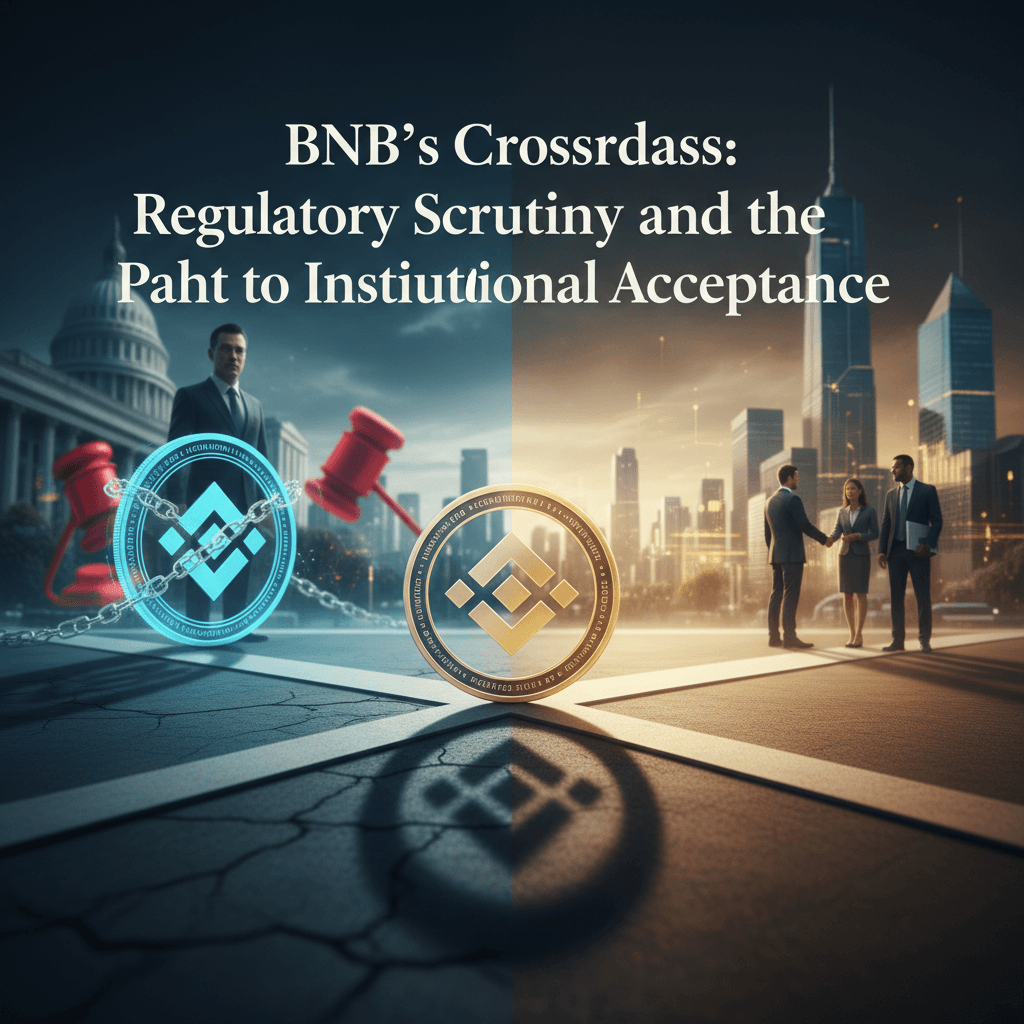
BNB's Crossroads: Regulatory Scrutiny and the Path to Institutional Acceptance
BNB, the native token of the Binance ecosystem, finds itself navigating increasingly turbulent regulatory waters. Once viewed as a primary benefactor of Binance’s rapid global expansion, BNB now faces a complex matrix of legal and market pressures that are reshaping its investment profile. The implications for institutional investors are profound, demanding a re-evaluation of risk assessments and strategic asset allocation.
This isn't merely a story of fluctuating prices, but a fundamental shift in the perceived security and long-term viability of an asset closely tied to a globally dominant, yet heavily scrutinized, exchange. This article delves into the specific policy shifts impacting BNB, dissects the institutional responses, analyzes the impact on investors (specifically regarding safety and risk), explores the political bottlenecks impeding resolution, and provides a realistic outlook for the next six months.
The Regulatory Dragnet Tightens
The core issue plaguing Binance and, by extension, BNB is the growing regulatory scrutiny across numerous jurisdictions. The U.S. Securities and Exchange Commission (SEC) lawsuit against Binance alleging unregistered securities offerings, including BNB, has been a watershed moment. Beyond the SEC, regulatory bodies in Europe, Canada, and Australia are actively increasing their oversight of Binance's operations, with several imposing restrictions or outright bans on certain activities. These actions create a fragmented regulatory landscape, forcing Binance to adapt its business model and geographical strategy. This fragmentation directly affects BNB's utility, as its value is intrinsically linked to the functionalities and services available within the Binance ecosystem. A reduction in these services or geographic accessibility translates directly into reduced demand for BNB.
Furthermore, the increasing pressure on stablecoins, especially those perceived as closely linked to Binance, adds another layer of complexity. Regulatory concern stems from the lack of transparency in reserve assets backing these stablecoins and the potential for systemic risk should one collapse. As BNB is often used in conjunction with these stablecoins within the Binance ecosystem, any crackdown on stablecoins indirectly dampens BNB's appeal.
Institutional Sentiment: A Shift Towards Cautious Engagement
Initially, BNB benefited from the "Binance halo effect," with institutional investors drawn to its potential for high returns fueled by Binance's expansive growth. However, the escalating regulatory challenges have triggered a significant shift towards more cautious engagement. Many institutions are now implementing stricter due diligence processes, focusing on legal compliance and regulatory risk assessments before allocating capital to BNB. Some have even temporarily suspended trading or holding BNB pending further clarity on the regulatory front.
This shift is reflected in the decreased open interest in BNB futures and options on regulated exchanges, indicating a reduction in leveraged positions held by institutional players. The demand for independent custody solutions for BNB holdings is also on the rise, suggesting a preference for mitigating counterparty risk associated with holding BNB directly on the Binance platform. Many institutional investors are actively exploring alternative blockchain platforms and tokens, diversifying their portfolios to reduce their reliance on the Binance ecosystem. The focus is shifting from simply chasing high returns to prioritizing capital preservation and regulatory compliance.
Protocol Plumbing: The Technical and Economic Underpinnings Under Pressure
BNB operates on the BNB Chain, a dual-chain architecture comprising the BNB Beacon Chain (for governance) and the BNB Smart Chain (for smart contracts and decentralized applications). The token's utility is multifaceted, including discounted trading fees on Binance, participation in token sales on Binance Launchpad, and gas fees on the BNB Smart Chain. The BNB Chain's security depends on a Proof-of-Staked Authority (PoSA) consensus mechanism, which relies on a relatively small set of validators chosen by Binance. This centralization has raised concerns about the chain's resilience and susceptibility to attacks.
The ongoing regulatory scrutiny is impacting the development and expansion of the BNB Chain ecosystem. Projects are hesitant to build on BNB Chain due to concerns about potential regulatory crackdowns, limiting the chain's ability to attract new users and developers. The blockspace demand decreases, limiting BNB's utility. Moreover, the increased scrutiny of Binance's financial health is raising questions about its ability to continue supporting the BNB Chain's infrastructure and development efforts. A slowdown in development activity could further erode BNB's value proposition.
Furthermore, the automatic BNB burn mechanism, designed to reduce the token's supply and increase its price, is also being scrutinized. Regulators are questioning whether this mechanism constitutes a form of unregistered securities offering, adding another layer of legal complexity to the tokenomics.
Safety, Value, and Risk: A Re-Evaluation of Investment Priorities
The perception of safety surrounding BNB has been severely eroded. Regulatory risks, counterparty risks associated with Binance, and technical risks inherent in the BNB Chain's architecture are all contributing to this decline. The value of BNB is now inextricably linked to Binance's ability to navigate the regulatory landscape and maintain its market dominance.
From an institutional investment perspective, the risk profile of BNB has significantly increased. The potential for substantial losses due to regulatory actions, legal proceedings, or loss of market share by Binance is now a major concern. Capital preservation has become the primary objective for many institutions, pushing them towards more conservative strategies and alternative digital assets. This translates in a need to reassess portfolio allocation strategies, diversifying away from BNB or reducing holdings significantly, and demanding more rigorous risk management practices.
Political and Technical Bottlenecks
A major political bottleneck is the lack of clear and consistent regulatory frameworks for digital assets across different jurisdictions. This ambiguity allows regulators to interpret existing laws in different ways, creating uncertainty for exchanges like Binance and impacting the value of tokens like BNB. The technical bottleneck lies in the centralized nature of the BNB Chain’s governance and validation process. Decentralizing the chain and improving its security would increase its resilience and attractiveness to developers, but it would also require significant technical changes and potentially disrupt its current operations.
Binance's ability to navigate the regulatory landscape and address concerns about its governance and transparency will be crucial in determining BNB's future. The company's ongoing efforts to cooperate with regulators, enhance compliance measures, and decentralize the BNB Chain ecosystem will be closely watched by institutional investors.
Realistic Six-Month Outlook
In the next six months, expect continued regulatory pressure on Binance, with potential for further legal proceedings and enforcement actions. This pressure will likely weigh on BNB's price, creating volatility and uncertainty. Institutional investors will likely maintain a cautious approach, awaiting greater clarity on the regulatory front before making any significant investment decisions. BNB burn mechanisms will likely be slowed down, or at least heavily scrutinized by regulators.
Binance will likely continue its efforts to enhance compliance and decentralize its operations, but these efforts will take time to produce tangible results. The success of these efforts will depend on Binance's willingness to cooperate with regulators and its ability to adapt its business model to the evolving regulatory landscape. The company might restructure, spinning off separate regional entities or relocating key operational functions to more favorable jurisdictions. The overall market sentiment towards cryptocurrencies will also play a role in BNB's performance. A broader market downturn could exacerbate the negative impact of regulatory challenges, while a renewed bull market could provide some support.
Ultimately, BNB's future hinges on Binance's ability to transform itself from a perceived regulatory risk into a compliant and transparent participant in the global financial system. This transformation will require a fundamental shift in its corporate culture, governance structure, and risk management practices.
Institutional Sentiment: Protocol Plumbing Considerations
Diving deeper into the "protocol plumbing" helps reveal more about institutional considerations. The staking dynamics within the BNB Chain significantly influence institutional decision-making. While staking BNB offers the potential for rewards, it also involves locking up capital, which can limit liquidity and flexibility. Institutions, often bound by strict risk management mandates, must carefully weigh the benefits of staking against these constraints. Furthermore, the highly concentrated validator set poses a centralization risk that many institutional investors find unpalatable. Any perceived vulnerability in the validator network, whether technical or governance-related, can trigger a rapid exodus of institutional capital.
The governance model itself contributes to institutional hesitations. Decisions regarding protocol upgrades and strategic direction are primarily driven by Binance, raising concerns about potential conflicts of interest and a lack of independent oversight. Institutions typically prefer decentralized governance structures that allow for broader participation and more transparent decision-making processes. The absence of such mechanisms in the BNB Chain ecosystem makes it challenging for institutions to exert influence or protect their interests.
Smart contract security is another critical aspect. Institutions require rigorous auditing and formal verification of smart contracts deployed on the BNB Chain to mitigate the risk of hacks, exploits, or other vulnerabilities. The level of scrutiny applied to smart contracts on the BNB Chain often falls short of institutional standards, further contributing to the perception of heightened risk.
Finally, the lack of regulatory clarity surrounding decentralized finance (DeFi) applications built on the BNB Chain adds another layer of complexity. Institutions must navigate a murky legal landscape when engaging with DeFi protocols, ensuring compliance with anti-money laundering (AML) and know-your-customer (KYC) regulations. The lack of clear guidance from regulators creates uncertainty and discourages widespread institutional participation.
Frequently Asked Questions:
Q1: How will increased regulatory oversight of stablecoins affect BNB's utility and price? A: Stricter regulation of stablecoins, particularly those integrated within the Binance ecosystem, could limit their usage, thereby reducing the demand for BNB, which is often used in conjunction with these stablecoins for trading and other transactions.
Q2: What specific steps is Binance taking to address regulatory concerns and improve its compliance posture? A: Binance is actively engaging with regulators, enhancing its KYC/AML procedures, expanding its compliance team, and restructuring its operations to align with local regulations in various jurisdictions.
Q3: What are the potential implications of the SEC lawsuit against Binance for BNB holders? A: The SEC lawsuit introduces significant legal uncertainty, potentially leading to penalties, restrictions on Binance’s operations, and a decline in the value of BNB if Binance is found to have violated securities laws.
Q4: How does the centralization of the BNB Chain impact its security and scalability, and what are the potential remedies? A: The centralized validator set raises security concerns and imposes limitations on the chain’s scalability. Potential remedies include increasing the number of validators, implementing a more decentralized consensus mechanism, and enhancing governance to allow for broader community participation.
Q5: What alternative blockchain platforms and tokens are institutional investors exploring as alternatives to BNB and the Binance ecosystem? A: Institutional investors are increasingly drawn to platforms like Ethereum, Cardano, and Solana, as well as tokens associated with established protocols and strong regulatory compliance standards. They are also increasing allocations to Bitcoin as a store of value and regulatory "safe haven."